
You’ve designed the biological treatment. You’ve calculated the hydraulic retention time. Everything looks good on paper.
Then the oil shows up. Or the fine suspended solids that refuse to settle. Or both.
Suddenly, your clarifier isn’t clarifying anymore — and downstream processes are struggling with loads they weren’t designed to handle.
This is where Dissolved Air Flotation (DAF) systems prove their value.
Unlike conventional settling (which relies on gravity), DAF uses micro-bubbles to lift contaminants to the surface. It’s not a replacement for every clarifier, but when you’re dealing with low-density solids, oils, or greases, it often outperforms traditional methods by a wide margin.
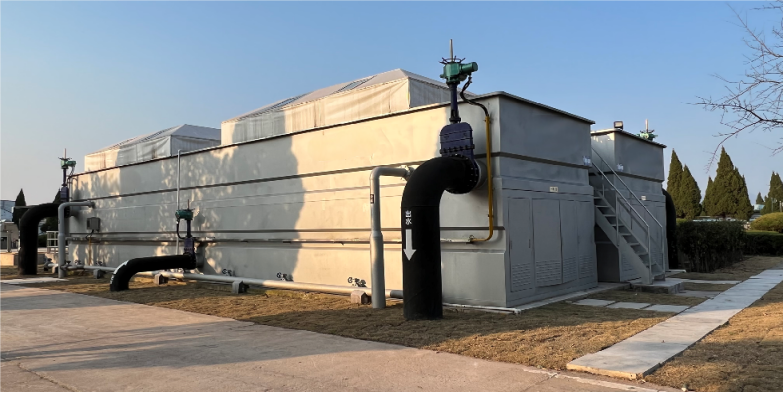
This article explains when DAF makes sense, how the technology actually works, and what to watch for when evaluating systems from different suppliers.
The Core Problem DAF Solves
When Gravity Isn’t Enough
Conventional settling tanks work beautifully — when particles are dense enough to sink.
But many industrial wastewaters contain:
Low-density particles that settle too slowly (or not at all):
- Biological floc from activated sludge
- Fine suspended solids from food processing
- Fiber and cellulose from pulp mills
Oils and greases that naturally float but disperse without proper treatment:
- Emulsified oils from metalworking
- Fats from slaughterhouses and rendering
- Petroleum hydrocarbons from refineries
Algae and organic matter in surface water treatment:
- Seasonal algae blooms
- Low-turbidity water with dissolved organic compounds
For these applications, DAF provides faster, more reliable separation — often in 10-20 minutes vs. 2-4 hours for conventional settling.
How DAF Technology Works
The principle is elegantly simple: attach air bubbles to particles, and they float.
But the engineering behind reliable performance is more nuanced.
The Four-Stage Process
Stage 1: Pressurization
A portion of treated water (typically 5-10% of influent flow) is pumped to a saturation tank and pressurized to 4-6 bar. At this pressure, air dissolves into the water far beyond atmospheric saturation levels.
Stage 2: Coagulation & Flocculation
Influent wastewater receives chemical dosing (coagulants and flocculants) to destabilize particles and form larger, more flotation-friendly aggregates. This happens in a rapid-mix chamber followed by a slower flocculation zone.
Stage 3: Bubble Formation & Attachment
The pressurized, air-saturated water is released into the flotation tank through special nozzles. As pressure drops to atmospheric, dissolved air comes out of solution as micro-bubbles (typically 10-100 microns).
These micro-bubbles attach to flocculated particles, drastically reducing their effective density.
Stage 4: Flotation & Skimming
Buoyant particle-bubble clusters rise to the surface, forming a concentrated float layer (or “sludge blanket”). A mechanical skimmer continuously removes this layer, while clarified water exits from the bottom of the tank.
Why Bubble Size Matters
The smaller the bubble, the better.
- Large bubbles (>500 microns) rise too quickly and don’t attach well to particles
- Micro-bubbles (10-100 microns) have massive surface area per unit volume, attach efficiently, and create stable flotation
This is why nozzle design and pressurization system quality are critical differentiators between DAF suppliers.
DAF Configuration Types
Not all DAF systems are built the same. The three main configurations suit different applications and site conditions.
Rectangular DAF Tanks
Best for: Large-scale municipal and industrial installations
- Larger footprint, but easier to integrate into linear process flow
- Multiple units can be installed in parallel for high-capacity plants
- Typical surface loading: 4-10 m³/m²/hr
- Suitable for flows from 50 m³/hr to several thousand m³/hr
Key advantage: Proven, scalable design with decades of operational data
Circular DAF Tanks
Best for: Compact installations and package plants
- Smaller footprint — ideal for space-constrained sites
- Radial flow pattern can improve hydraulic distribution
- Often supplied as packaged, skid-mounted units
- Typical surface loading: 5-12 m³/m²/hr
Key advantage: Factory-fabricated, faster installation, better for modular/temporary plants
High-Rate DAF (HDAF)
Best for: Upgrading existing plants or ultra-compact designs
- Surface loading rates up to 15-20 m³/m²/hr (2-3× conventional DAF)
- Requires more precise flocculation and chemical dosing control
- Often incorporates lamella plates for enhanced separation
Key advantage: Maximizes capacity within existing footprint constraints
Selection tip: Don’t default to the smallest footprint option without considering your operators’ experience and chemical dosing control capabilities. High-rate systems can be excellent — but they demand tighter process control.
Critical Components That Define Performance
1. Saturation System (The Heart of DAF)
This is where air dissolves into water under pressure.
What to evaluate:
- Saturation efficiency: Well-designed systems achieve 90%+ dissolution efficiency
- Pressure vessel design: Look for ASME-certified vessels with proper air release valves
- Pump selection: Multistage centrifugal pumps are standard; check for seal-less mag-drive options for maintenance reduction
Red flag: Undersized saturation tanks or pumps that can’t maintain stable pressure lead to inconsistent bubble generation and poor flotation.
2. Release Nozzles (Where Micro-Bubbles Form)
Nozzle design determines bubble size distribution.
What to evaluate:
- Nozzle material: Stainless steel or engineered plastics resistant to clogging
- Flow path design: Look for vortex or turbulence-inducing designs that promote uniform bubble size
- Maintenance access: Can nozzles be inspected and cleaned without draining the tank?
Red flag: Proprietary nozzle designs with no local spare parts availability can cripple operations during failures.
3. Skimmer Mechanism (Float Removal)
What to evaluate:
- Drive system: Chain-driven vs. cable-driven vs. screw-driven systems each have trade-offs
- Skimming speed: Variable-speed control allows adjustment based on float characteristics
- Beach angle: Proper slope (typically 3-5°) ensures effective float discharge without carryover
Red flag: Under-engineered skimmers that jam under heavy float loads or can’t handle variable sludge consistency.
4. Chemical Dosing Integration
DAF performance is heavily dependent on proper coagulation/flocculation.
What to evaluate:
- Dosing control: PID-controlled pumps with flow-proportional dosing?
- Rapid mix energy: Sufficient turbulence (G-value ~300-500 s⁻¹) for coagulant dispersion?
- Flocculation time: Adequate retention (10-20 minutes typical) with gentle mixing (G ~30-50 s⁻¹)?
Red flag: DAF systems sold without proper attention to upstream chemical conditioning — chemistry is 50% of DAF success.
Application-Specific Considerations
Municipal Wastewater (Thickening & Clarification)
Primary use: Thickening waste activated sludge (WAS) before dewatering
- Typical solids capture: 90-95%
- Float solids concentration: 3-6%
- Polymer dosing: 2-8 kg per tonne dry solids
Tip: DAF thickening ahead of centrifuges or belt presses can significantly reduce polymer consumption in the dewatering step.
Industrial Oil/Water Separation
Primary use: Removing free and emulsified oils from petrochemical, refinery, and metalworking wastewaters
- Typical oil removal: 95-99%
- Effluent oil content: <10-15 mg/L
- Chemical program: Usually includes coagulants (ferric chloride, alum) + cationic polymers
Tip: Pre-treatment with API separators or CPI units to remove free oil extends DAF performance and reduces chemical costs.
Food & Beverage Processing
Primary use: Removing fats, oils, greases (FOG), proteins, and suspended solids from rendering, dairy, and meat processing
- Typical TSS/COD removal: 85-95%
- Float consistency: Often 4-8% solids (higher than municipal applications)
- pH adjustment: Usually required (optimal flocculation pH 6-7 for many food waste streams)
Tip: DAF float from food processing is often suitable for anaerobic digestion or rendering, creating potential revenue opportunities.
Drinking Water Treatment
Primary use: Removing algae, low-density floc, and natural organic matter (NOM) from surface water
- Typical turbidity removal: <0.5 NTU effluent
- Algae removal: >90% (critical for taste/odor control)
- Lower chemical dosing vs. conventional settling due to shorter retention times
Tip: DAF is increasingly favored over conventional settling for treating low-turbidity, high-NOM source waters — especially with seasonal algae challenges.
What to Watch For When Comparing DAF Suppliers
You’ll receive data sheets claiming 95%+ removal efficiency. Everyone does.
Here’s what actually matters:
Performance Under Your Conditions
- Can the supplier provide pilot test data or case studies from similar industries and influent characteristics?
- Are hydraulic loading rates and chemical dosing based on actual jar tests with your wastewater, or generic assumptions?
Materials & Build Quality
- Tank construction: Stainless steel (SS304/316), coated carbon steel, or concrete?
- Rotating components: Sealed bearings? Corrosion-resistant materials in contact with sludge?
- Electrical components: IP65-rated for wet environments?
Long-Term Operating Costs
- What’s the energy consumption of the saturation pump? (This is often 60-70% of total DAF energy use)
- What’s the expected chemical dosing rate — and have they validated this with jar testing?
- Are wear parts (nozzles, bearings, seals) standardized and locally available?
Post-Installation Support
- Does the supplier provide startup assistance and operator training?
- Is there local technical support, or do you have to wait for engineers to fly in from another country?
- Can you get replacement parts within 48-72 hours, or are lead times measured in weeks?
How G-LINK Approaches DAF Procurement
We don’t manufacture DAF systems. We don’t push a single brand.
What we do: Help you evaluate options objectively and avoid costly mistakes.
Our process:
1. Validate Your Application
Before recommending any equipment, we confirm:
- Is DAF the right choice, or would conventional settling + filtration be simpler/cheaper?
- What are realistic performance expectations given your influent characteristics?
- What’s the optimal surface loading rate for your specific wastewater?
2. Cross-Check Technical Specifications
We review proposals from multiple manufacturers and flag:
- Undersized saturation systems or pumps
- Nozzle designs with poor track records
- Inadequate chemical dosing or flocculation design
- Materials that won’t hold up in your operating environment
3. Coordinate Pilot Testing or Jar Tests
Many suppliers offer generic “reference data.” We push for:
- Actual jar tests with your wastewater samples
- Pilot testing (for large projects) to validate removal efficiency and chemical dosing
4. Bridge Communication Gaps
Technical details get lost in translation — especially when working with Chinese manufacturers.
We ensure:
- Your specifications are clearly understood
- Technical questions are answered accurately (not just “yes, we can do that”)
- Design drawings reflect actual site conditions and integration requirements
5. Factory Inspection & Quality Control
Before shipment, we can coordinate:
- Inspection of materials and fabrication quality
- Verification of component brands (pumps, motors, instrumentation)
- Functional testing of control systems
The goal: Make sure what arrives at your site matches what was promised — and that it will perform reliably from day one.
Final Thoughts
DAF isn’t a magic solution. It won’t fix poor upstream process control, and it won’t remove contaminants that aren’t amenable to flotation.
But when applied correctly — in the right application, with proper chemical conditioning, and with well-engineered equipment — DAF delivers separation performance that conventional settling simply can’t match.
If you’re evaluating DAF for an upcoming project, the most important step is ensuring the technology actually fits your needs — and that the equipment is designed for long-term reliability, not just the lowest bid.
We’re here to help you navigate those decisions.
Exploring DAF options for your project? Contact us to discuss your application requirements, or learn more about our wastewater treatment equipment sourcing services.
Related resources:
- Comparing Coagulants: Ferric vs. Alum vs. PAC for DAF Applications (coming soon)
- Common DAF Operational Issues and Troubleshooting Guide (coming soon)